Remote Server Login
RDP · SSH · Jump hosts
Read moreMulti-factor authentication over network device administration, storage management, Cisco ISE policy administration and operational technology consoles — the accounts with the widest blast radius.
Network and infrastructure consoles are usually protected by a shared local credential that a handful of engineers know and nobody rotates. They rarely appear in identity projects because they are not user accounts in the usual sense.
They are also the accounts that let an attacker turn a foothold into control of the environment — changing routing, disabling logging, or opening a path into an operational network that was supposed to be segmented.
| Before | After |
|---|---|
| A shared console password known to several engineers. | Named identities, each with its own second factor. |
| No way to attribute a configuration change. | Every administrative action ties back to a person. |
| Consoles in signal-free plant areas are exempted. | Offline modes remove the need for an exception. |
Network devices, storage controllers and policy servers authenticate administrators against the platform.
Named administrator identities replace the shared local credential, so actions are attributable.
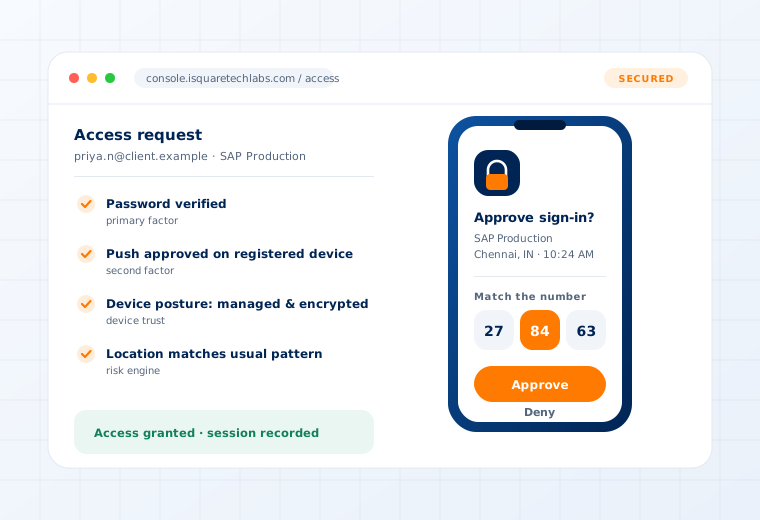
Administrative access requires out-of-band approval, with offline modes for consoles in restricted areas.
Where privileged access management is in scope, the session itself is brokered and recorded.
If yours is not here, our team will answer it directly.
Ask usBring the system you are worried about and we will show you exactly how this control would be applied to it.